81 Tagore Lane, TAG A, #01-11 Singapore 787502 ♦ Reservation : +65 6727 5599

Confinement Foods From Different Cultures
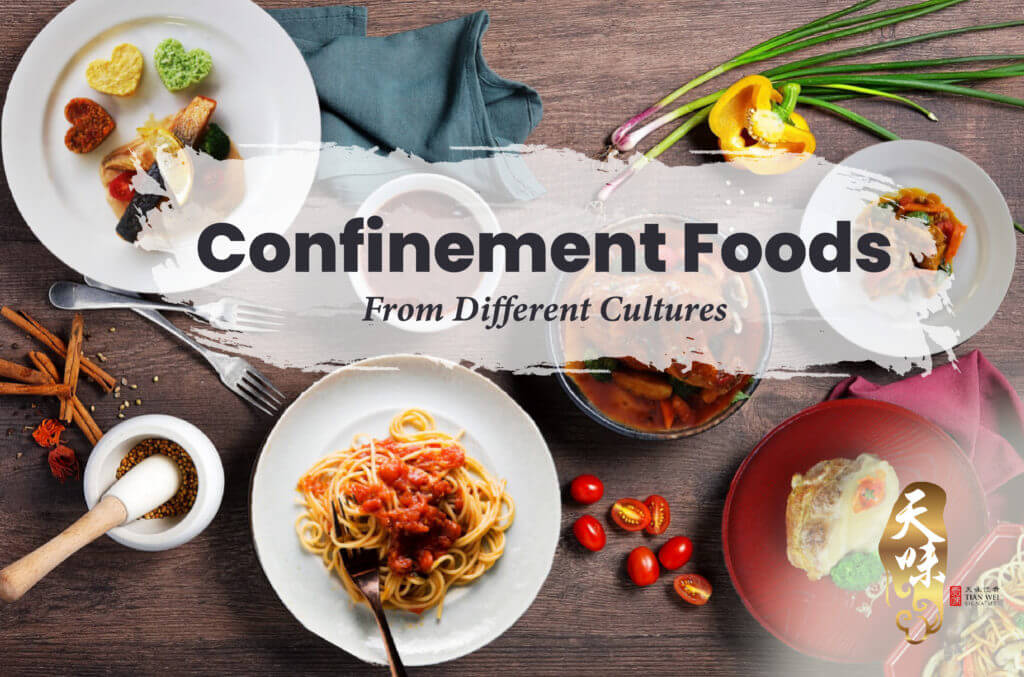
Wherever you are from – especially Asian countries and families – you have most likely heard of the new mothers’ practice of confining oneself after birth. They rarely leave the house unless out of necessity like going to the doctor and they would stay indoors in thick layers of clothing all day long.
Is that all confinement is? Staying indoors and keeping yourself warm? Well, perhaps yes to some, but definitely no to many others!
Many would argue that there are far more crucial aspects of confinement rather than just being at home at all times and not exposing yourself to the cold outside air. For example, what you eat during confinement!
As confinement begins immediately right after childbirth, it is also coincidentally the best and most critical period for you to enrich your body with ample nutrients that will boost recovery.
Not to mention, it is also the time for moms to bond with their newborns. While taking care of your infant is essential, you must also remain following a healthy diet all the way through.
Why you need a balanced diet
Proper nutrition is vital for a new mother, whether you are planning to strictly adhere to confinement practices or not.
A poor diet will result in low breast milk supply which can cause harmful conditions such as malnutrition, frail bones and weakened immunity for the baby. This is something that should be taken seriously as your baby will most likely depend on your breast milk for the first few months of their life. Plus, moms must eat well in order to raise their newborns well!
Different cultures boast of different dietary practices and confinement food menu during the confinement period. Let’s look at some of the best confinement foods from different cultures below!
Indian Confinement Food
Indian food for confinement period is rich in ingredients that support digestion, lactation, and immunity against infections. These include parathas, khers, and ladoos which make use of broken wheat, millet, methi, sesame, dry fruits, turmeric, fenugreek, semolina, and besan. Ghee is almost an ever-present ingredient in every food prepared for the new mother.
Each morning, mothers are served with turmeric milk which consists of freshly ground turmeric added to boiling milk. Garlic milk is also a viable alternative and serves to increase lactation. Steamed food items such as idiyappam and idli are great breakfast options too.
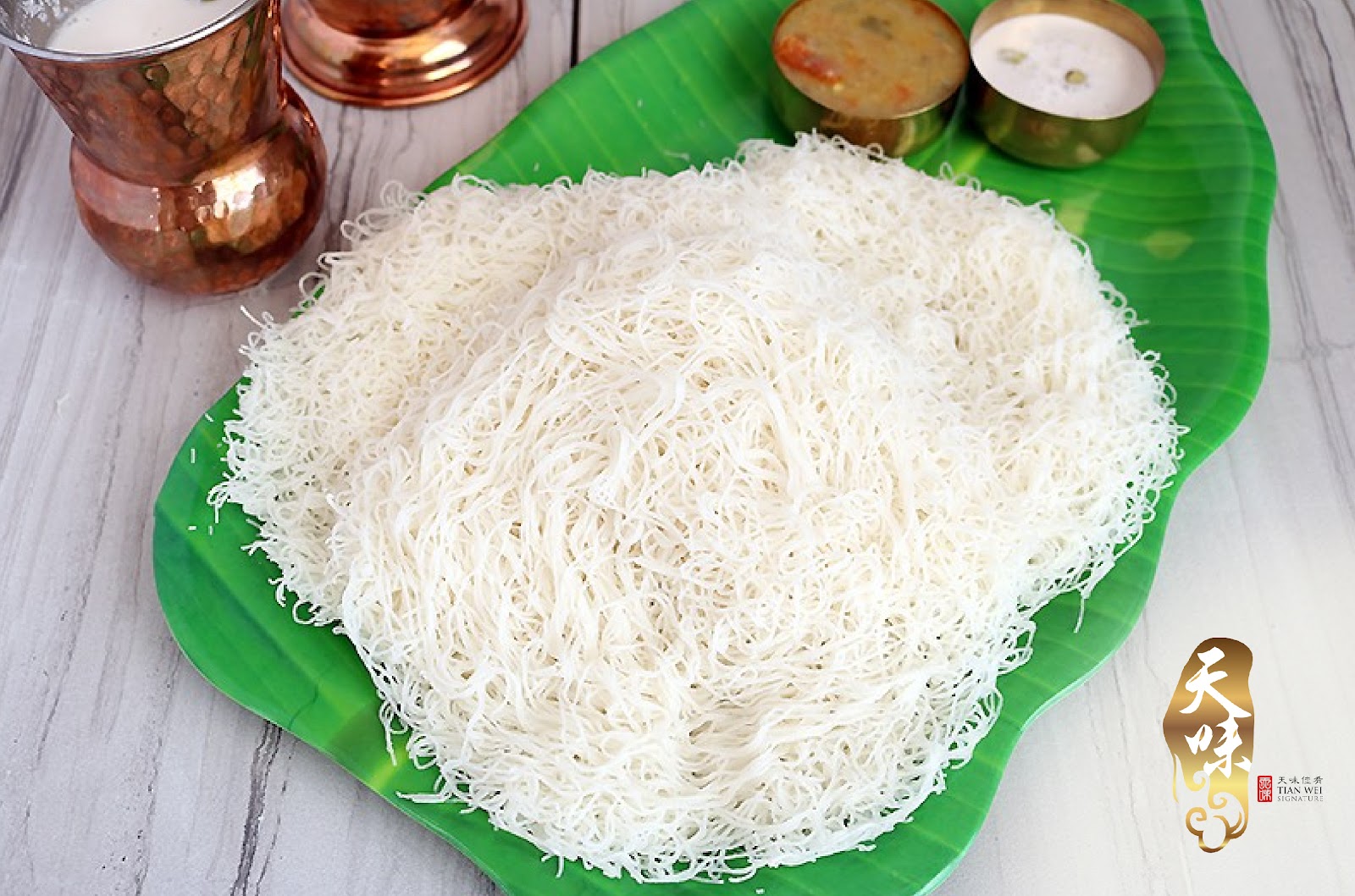
Khichdi, made up of rice and moong dal, is a good lunch option because it is a good source of carbohydrates. Meanwhile for dinner, mothers can feast on ajwain parathas which supports lactation as well as cleaning of the uterus. Last but not least, boiled water with fennel seeds or fenugreek seeds is given to new mothers to aid in breast milk production and alleviate back pain respectively.
Chinese Confinement Food
Pig’s meat combined with vinegar acts as a great immune booster and usually helps new moms regain a healthy weight. A protein and carbohydrate-rich diet of fried rice with eggs and ginger are one of the highly recommended Chinese confinement diets. Perhaps the most popular dish on the list of Chinese confinement food, steamed tofu taken with eggs and minced chicken aids in lactation as well as breast milk supply.
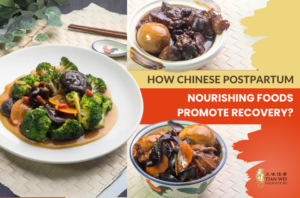
On top of our fusion dishes, Tian Wei confinement food also consists of the more traditional, homelier Chinese cuisines! We have Braised Pork Trotter Vinegar, Sesame Braised Chicken, Red Fermented Wine Chicken, Stewed Pork with Galangal and Lemongrass, and many more!

Malay Confinement Food
Did you know that women are encouraged to increase their consumption of ginger, turmeric, and drumstick leaves after childbirth in Malay culture? If you take a look at any menu from a Malay confinement food delivery service, you’ll notice that special foods like fresh fish, snakehead fish (ikan haruan), threadfin fish (ikan kurau) are on the menu during the confinement period.
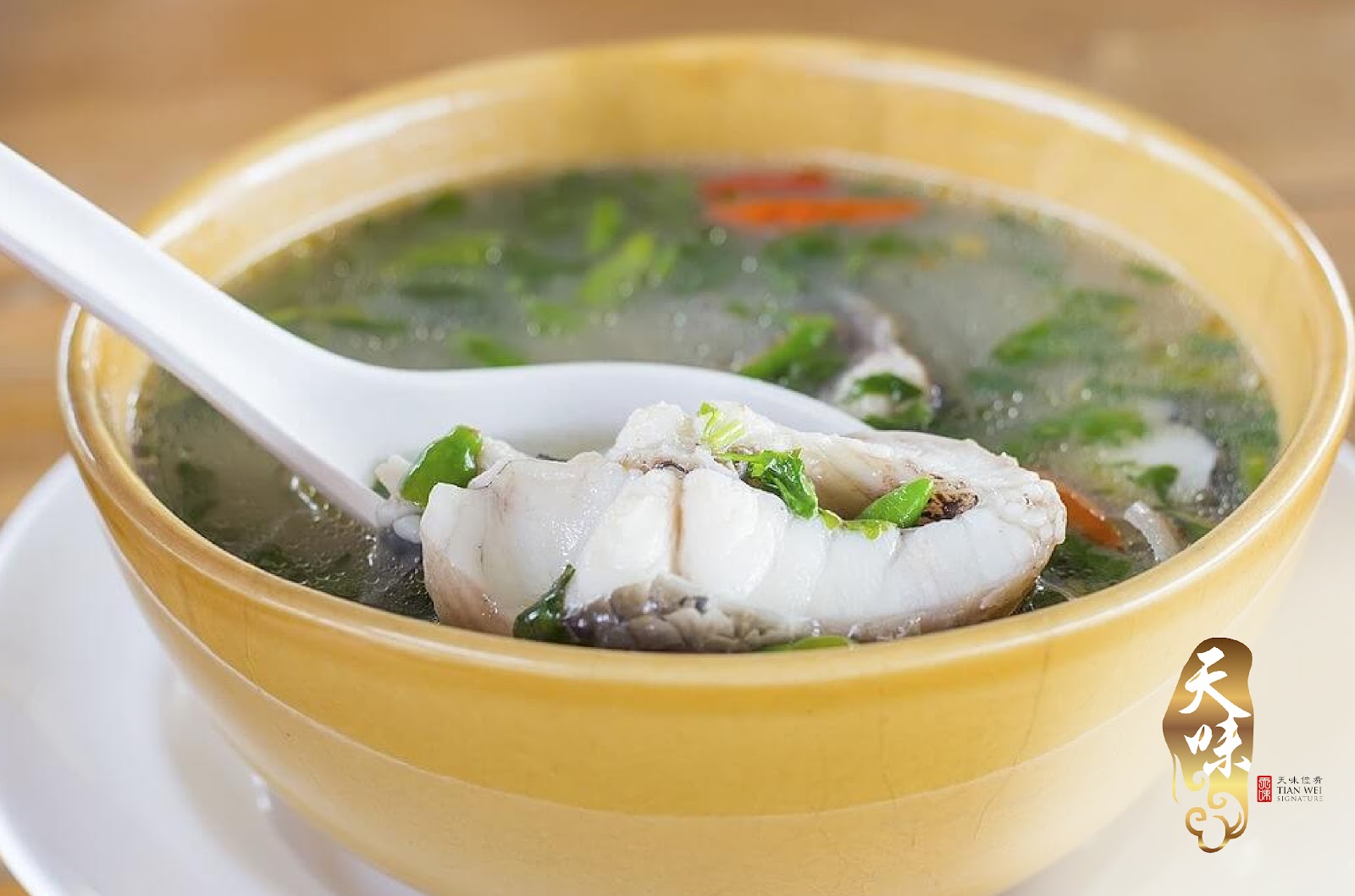
Soups prepared from the above-mentioned fishes are believed to speed up inner healing and replenish energy reserves especially for mothers who were subjected to Caesarean section. Gourd vegetables, like zucchini and bottle gourd, can help to boost breast milk production.
Eurasian Confinement Food
Some of the Eurasian cuisines for new mothers include Indian-influenced curries such as vindaloo, devil’s curry and mee siam. These curries are enhanced by ginger and garlic to bring out the full flavours. Rich in protein, eating them helps mothers gain the required weight after childbirth.
For lunch, Tilapia Fish Moolie with Coconut Milk will do the trick! For dinner, mothers can enjoy Shepherd’s Pie and Smore! The Shepherd’s Pie is a thick-crusted pie consisting of diced vegetables and milled beef or lamb while the Smore is a nutritious vegetable and beef stew. Don’t they sound tantalising?
Arab Confinement Food

Maqluba is a popular dish for women during the postpartum period in Arab culture. This diet consists of rice, lamb, eggplant, and cauliflower. It is a good source of carbohydrates which aids in restoring depleted energy reserves in new mothers. Mansaf is another nutrient-filled delicacy consisting of a lamb cooked in dried yogurt and served with rice.
Another dish that is rich in protein is dishes made in a tagine and made up of meats and veggies cooked together. Rather than drinking tap water, new mothers are encouraged to drink Huwa water prepared by adding Huwa seeds to boiled water.
Wholesome confinement food is crucial for the health of both the baby and the mom! You can engage a confinement meal caterer to prepare and deliver the meals for you while you rest and look after your baby.